Introduction
I am Satwik M Kotian, an Electrical and Electronics Engineering student with a strong interest in embedded systems and firmware development. In this blog, I will explain the fundamental skills required to enter the embedded systems industry.
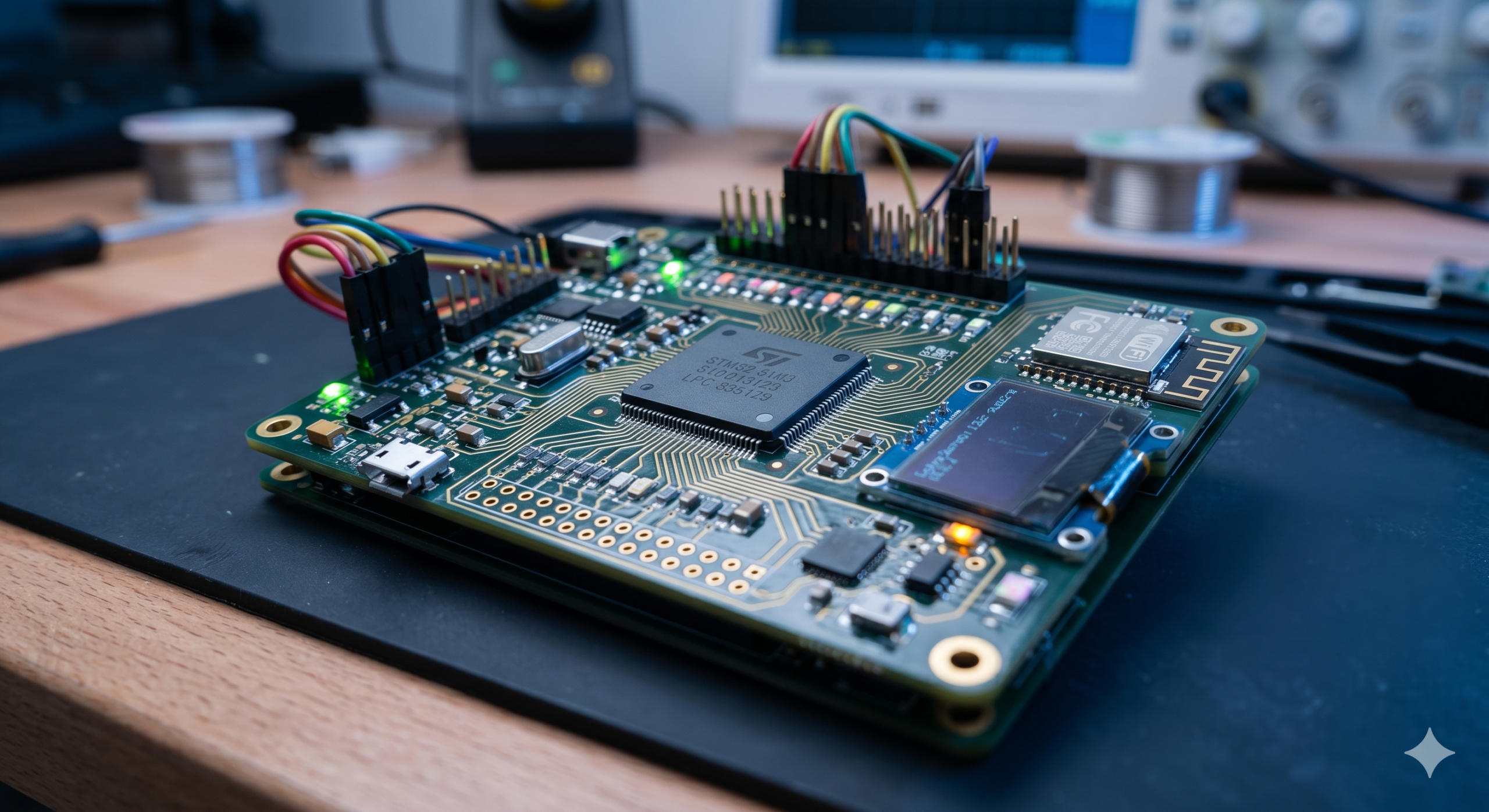
Embedded systems is a field that combines both hardware and software, and building a strong foundation is essential to succeed.
1. Strong Programming Skills (C Language)
C is the most important programming language in embedded systems.
You should understand:
- Data types and variables
- Pointers and memory handling
- Bitwise operations
- Structures and unions
C is used because it provides low-level control over hardware.
2. Understanding Microcontrollers
You must learn how microcontrollers work.
Key concepts include:
- GPIO (input/output control)
- Timers and counters
- ADC (Analog to Digital Converter)
- PWM (Pulse Width Modulation)
Popular platforms:
- STM32
- Arduino
- ESP32
3. Communication Protocols
Communication is essential in embedded systems.
You should know:
- UART
- SPI
- I2C
These are used to communicate between microcontrollers and external devices like sensors and modules.
4. Basic Electronics Knowledge
Since embedded systems involve hardware, basic electronics is important.
You should understand:
- Voltage, current, and resistance
- Ohm’s Law
- Basic circuit connections
- Sensors and actuators
5. Embedded Programming Concepts
You should be comfortable with:
- Bare-metal programming
- Register-level programming
- Memory-mapped I/O
This helps in understanding how software interacts with hardware.
6. Tools and Development Environment
You should learn how to use:
- STM32CubeIDE / Keil
- Debugging tools (ST-Link)
- Serial monitor tools
These tools help in writing, testing, and debugging embedded applications.
7. Hands-On Projects (Very Important)
Practical experience is the key to entering the industry.
Start with simple projects:
- LED control using GPIO
- Button-controlled LED
- UART communication projects
Projects help in understanding real-world implementation.
Conclusion
To enter the embedded systems industry, you need a combination of programming, hardware knowledge, and practical experience. Starting with strong fundamentals and building projects step by step will help in developing the required skills.